This article was medically authored by Dr. Sachin Sheth and last reviewed for accuracy on 08/27/2026.
Key Takeaways
Dealing with hemorrhoids is uncomfortable enough, but when back pain joins the mix, it can feel overwhelming. While there isn’t a direct link between hemorrhoids and back pain, the two can be intertwined due to lifestyle adjustments that come with managing hemorrhoid symptoms.
Additionally, some underlying conditions may trigger both issues simultaneously. Understanding this complex relationship is crucial for finding the right treatment and relief.
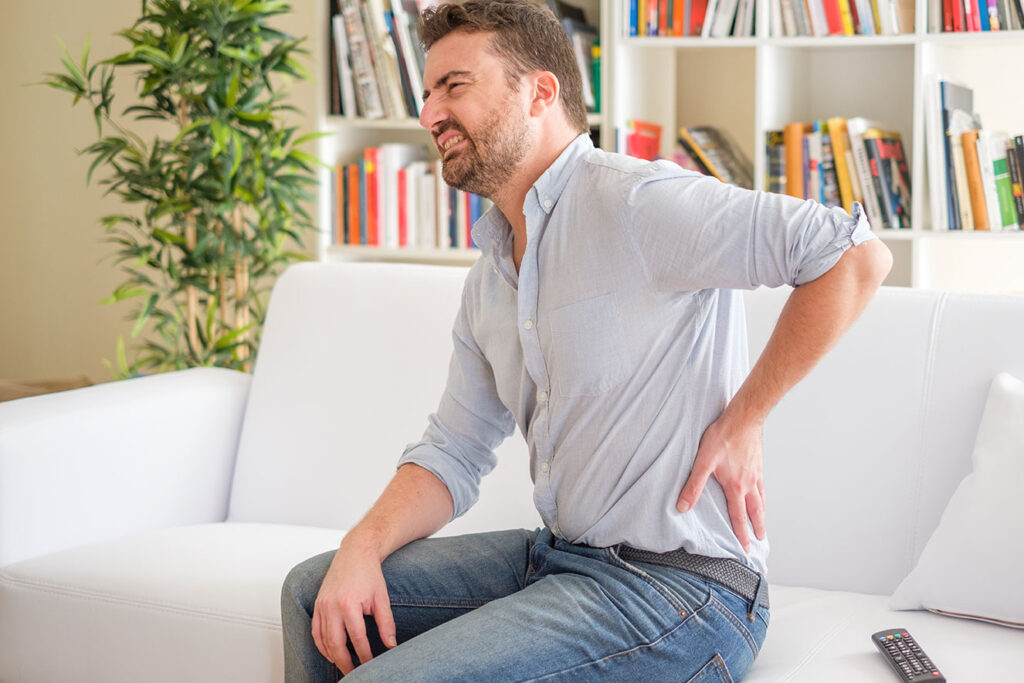
Hemorrhoids generally don't directly cause lower back pain. Instead, experiencing both conditions at the same time may be related to shared lifestyle and bowel habits.
Constipation is one example. When stool is difficult to pass, you may strain during bowel movements or spend longer periods sitting on the toilet. Straining increases pressure on the veins and tissues surrounding the anus and rectum, potentially contributing to hemorrhoids.
At the same time, sitting for extended periods and changing the way you sit or move because of hemorrhoid discomfort may contribute to muscle stiffness or discomfort in the lower back.
This doesn't mean that hemorrhoids are the source of your back pain. Instead, constipation, inactivity, prolonged sitting, and changes in movement may help explain why the two problems sometimes occur together.
If you’re dealing with the stinging pain of hemorrhoids, the last thing you need is the added burden of back pain. While hemorrhoids are swollen blood vessels that cause localized pain and itching in the rectal area, you might be surprised to learn they can also influence how your back feels. But how?
Lifestyle habits are often to blame for both issues. For example, hemorrhoids may form from the pressure of straining to pass bowel movements. That pressure can ripple through your body, leading to excess tension in your lower back. What’s more, prolonged sitting and a sedentary lifestyle are other common risk factors that exacerbate hemorrhoids and back pain.
If you have chronic constipation, a risk factor for hemorrhoids, it can alter the way you walk or sit, making it more likely that these risk factors for hemorrhoids can make your back hurt. When you understanding how these factors interact, you can take effective steps to alleviate discomfort in both areas and get much-needed relief.
Constipation is an important factor to consider if you're experiencing hemorrhoids and lower back discomfort at the same time.
Common signs of constipation include:
Repeated straining increases pressure in the rectal area and can contribute to the development or worsening of hemorrhoids.
Constipation may also leave you feeling uncomfortable enough to change how you sit, stand, or move throughout the day. Spending more time sitting or becoming less physically active because of discomfort can contribute to stiffness and lower back pain.
Addressing constipation can therefore be an important part of managing hemorrhoid symptoms, even when another issue is responsible for your back pain.
Lower back pain itself does not directly cause hemorrhoids.
However, back pain can sometimes change your daily habits. If discomfort causes you to become less physically active or spend more time sitting, those behavioral changes may indirectly contribute to constipation or hemorrhoid risk.
Likewise, certain habits may contribute to both conditions. These include:
Addressing these shared factors may help improve bowel habits and reduce hemorrhoid irritation while supporting your overall physical health.
Because hemorrhoids are not a typical cause of back pain, persistent lower back discomfort shouldn't automatically be attributed to your hemorrhoids.
Back pain can have many causes unrelated to hemorrhoids. Muscle strains, changes in physical activity, prolonged sitting, and other musculoskeletal or medical conditions can all cause discomfort in the lower back.
Consider talking with your healthcare provider if your back pain:
Similarly, don't assume that all rectal pain or bleeding is caused by hemorrhoids. Persistent or unexplained symptoms should be appropriately evaluated so you can identify their actual cause.
When hemorrhoids and back pain occur together, treatment should focus on the underlying cause of each problem rather than assuming that treating one will automatically resolve the other.
For hemorrhoids associated with constipation and straining, start by improving your bowel habits:
Mild hemorrhoids may improve with these conservative measures. However, persistent symptoms may require additional treatment.
The appropriate treatment depends on the severity and type of hemorrhoids you have.
Grade 1 internal hemorrhoids do not prolapse and may respond to dietary and lifestyle changes. Grade 2 hemorrhoids prolapse during a bowel movement but return inside on their own, while Grade 3 hemorrhoids may require manual repositioning. Grade 4 hemorrhoids remain prolapsed and may require surgical treatment.
If you have symptomatic Grade 2 or Grade 3 internal hemorrhoids that haven't improved with conservative measures, a minimally invasive treatment may be an option.
Georgia Endovascular offers Hemorrhoid Artery Embolization (HAE) for appropriate patients.
HAE treats internal hemorrhoids by targeting the blood vessels supplying the swollen hemorrhoidal tissue.
During the procedure, an interventional radiologist uses image guidance to navigate a small catheter to the arteries supplying the hemorrhoids. Tiny embolic materials are then placed to reduce blood flow to the affected tissue.
As the blood supply decreases, the hemorrhoids can gradually shrink and symptoms may improve.
For appropriate candidates, benefits of HAE include:
An evaluation is necessary to determine whether HAE is appropriate based on the type and severity of your hemorrhoids.
If hemorrhoids and back pain are occurring together, identifying what is causing each symptom is an important first step. Improving constipation, reducing straining, and staying active may help manage mild hemorrhoids, but ongoing hemorrhoid symptoms shouldn't simply become part of your routine.
If you have persistent Grade 2 or Grade 3 internal hemorrhoids, Georgia Endovascular offers minimally invasive treatment options designed to address the underlying hemorrhoidal blood supply.
Contact our team to discuss your symptoms and determine whether Hemorrhoid Artery Embolization may be right for you.
Scheduling
Please contact our dedicated specialists to schedule a consultation today.