678.208.9894 CALL TODAY

ADVANCED VEIN & VASCULAR CARE IN ATLANTA

Vein disease in Atlanta: why your legs ache  and how we fix it without surgery

Legs that throb after a long shift, swell on the drive home, or feel like they’re full of sand by dinnertime usually aren’t a sign of getting older. They’re a sign that the one-way valves inside your leg veins have stopped closing — a condition called venous insufficiency. It’s common, it’s progressive, and at Georgia Endovascular it’s treated in our office in about an hour, with no hospital stay and no general anesthesia.
  • No hospital stay
  • Same-day, outpatient
  • Covered by most insurance

Thousands of

Procedures performed

Same day

Most patients walk out and drive themselves home

About 1 hour

Typical in-office procedure time

Board-certified / Fellowship-trained

Interventional radiologists

start here

What is vein disease?

Vein disease is what happens when the valves inside your leg veins stop sealing properly and blood begins falling backward instead of returning to the heart. Doctors call this venous reflux or chronic venous insufficiency. The pressure that builds up is what produces the aching, swelling, and bulging veins you can see.

Your leg veins have a hard job. They move blood uphill, against gravity, from your feet back toward your chest — and they do it without a pump of their own. Instead, they rely on two things: the calf muscles squeezing with every step, and a series of small one-way valves that snap shut between squeezes so the blood you just moved upward doesn’t slide back down.

When those valves weaken, blood pools in the lower leg. The veins stretch under the extra pressure, which pulls neighboring valves apart, which allows more blood to pool. That feedback loop is why vein disease almost never stabilizes on its own — and why the symptoms so many people write off as fatigue tend to get louder year after year.

Why it gets missed for so long
Vein disease is often invisible from the outside. Roughly half the people we treat in Atlanta have no rope-like varicose veins at all — just legs that hurt, swell, cramp at night, or feel restless the moment they sit still. Because there’s nothing dramatic to point at, patients tend to attribute it to standing all day, to their weight, to their shoes, or to age, and they live with it for a decade before anyone runs an ultrasound.
RISK FACTORS

What causes vein disease? Who tends to get it?

Vein disease develops when leg vein valves fail. The strongest predictors are family history, pregnancy, age, and any occupation or routine that keeps you standing or seated for hours at a stretch. Excess weight and a history of blood clots meaningfully raise the risk as well.

Family History

This is the single strongest predictor. If both of your parents had varicose veins, your own risk climbs sharply. Vein wall strength and valve structure are inherited traits — which is why we always ask about your mother’s and grandmother’s legs, not just your own.

Long hours on your feet

Nurses, teachers, stylists, line cooks, warehouse staff and crews all share the same occupational exposure: hours of standing with very little calf-muscle movement. Standing still is harder on your veins than walking all day.

Long hours seated

Metro Atlanta has one of the longest average commutes in the Southeast. An hour each way on I-285, I-75, or GA-400 means two hours a day with your knees bent, your calf pump idle, and blood sitting in your lower legs — repeated five days a week for years. 

Pregnancy and hormones

Pregnancy increases circulating blood volume by up to 50% while progesterone relaxes vein walls, and the growing uterus presses on the pelvic veins. Many women first notice varicose veins during a second or third pregnancy. Some improve postpartum; many do not, and each subsequent pregnancy adds risk.

Age and cumulative wear

Vein valves are thin, flexible tissue that has been opening and closing since before you were born. They stiffen and lose their seal over time. Symptoms most often surface between 40 and 60 — but we regularly treat patients in their late 20s and early 30s, particularly those with a strong family history.

Weight & inactivity

Extra body weight raises the pressure inside the abdomen, which pushes back down on the leg veins and makes it harder for blood to climb out. Georgia’s adult obesity rate is among the higher tiers nationally, which is one reason venous disease is so widely underdiagnosed here. Prior DVT also permanently damages valves.

know the signs

What are the symptoms 
of vein disease?

The most common symptoms of vein disease are legs that ache, throb, or feel heavy, along with ankle swelling, night cramps, itching, and restless legs. Visible signs include bulging ropelike veins, spider veins, and brown discoloration around the ankle.
  • Bulging or twisted veins
  • Leg aching or throbbing
  • Swelling in legs or ankles
  • Heaviness or fatigue
  • Night cramps
  • Restless legs
  • Itching or burning
  • Skin discoloration
  • Slow-healing leg ulcers
  • Spider veins
our expertise

Vein & vascular conditions treated 
at Georgia Endovascular

Vein disease shows up under a dozen different names. Below are the conditions our Atlanta team diagnoses and treats most often — and how each one connects back to the same underlying pressure problem.

Varicose veins

Vein disease shows up under a dozen different names. Below are the conditions our Atlanta team diagnoses and treats most often — and how each one connects back to the same underlying pressure problem.

Spider veins

Fine red, blue, or purple lines just beneath the skin surface, most often on the thigh, calf, or ankle. Frequently cosmetic — but a dense cluster around the ankle can be the first outward sign of underlying reflux.

Chronic venous insufficiency (CVI)

The umbrella diagnosis: leg vein valves that no longer seal, allowing blood to pool. CVI is what drives most of the swelling, aching, skin discoloration, and ulceration patients come to us for.

Deep vein thrombosis (DVT)

A clot in one of the deep leg veins. DVT is a medical urgency because of the risk of pulmonary embolism, and it permanently damages valves — which is why so many post-DVT patients develop chronic swelling years later.

Leg discoloration

Skin darkening or color changes caused by poor circulation and prolonged venous disease. Often develops gradually as blood pools in the lower legs and damages surrounding tissue. May be an early sign of advanced chronic venous insufficiency.

Leg pain

Aching, burning, or throbbing sensations in the legs, often linked to underlying vein dysfunction. Symptoms typically worsen after long periods of standing or sitting and improve with leg elevation. May be an early sign of chronic venous disease.

Leg ulcers

Open wounds near the ankle caused by sustained venous pressure. Wound care alone rarely closes them for good. Correcting the underlying reflux is what stops the cycle of healing and reopening.

Pelvic congestion syndrome

Chronic pelvic pain, pressure, or heaviness caused by dilated pelvic veins. Often overlooked for years and misattributed to other gynecologic causes. Frequently accompanied by varicose veins on the upper inner thigh or buttock.

Restless leg syndrome

Not every case of restless legs is neurological. When symptoms are confined to the legs, worsen at rest, and improve with elevation, an underlying venous cause is worth ruling out — many patients see real improvement after treatment.

Swelling & lymphedema

Long-standing venous overload can overwhelm lymphatic drainage, producing swelling that no longer resolves overnight. Accurate diagnosis matters because the treatment pathways differ.

When to see a vein specialist

Persistent swelling, aching, skin changes, or
visible veins are signs to get evaluated.

TREATMENT

How is vein disease treated without surgery?

Modern vein treatment does not involve vein stripping or hospital admission. Using ultrasound guidance, your physician closes the failing vein through a pinhole in the skin, and blood immediately reroutes into healthy veins nearby. Most procedures take under an hour, use local anesthetic only, and allow you to walk out afterward.
How treatment works, step by step
  1. Mapping ultrasound: Before anything is treated, we perform a duplex ultrasound while you’re standing, which is the only position that reveals reflux accurately. It shows us exactly which veins are failing, how severely, and in what order — so treatment addresses the source instead of chasing symptoms.
  2. Closing the vein: Through a needle-sized entry point, a thin catheter or fine needle is guided into the target vein. Depending on the vein’s size, depth, and pattern, your physician seals it using heat, a medical adhesive, or a specialized solution. You’re awake and comfortable throughout, under local anesthetic.
  3. Rerouting and recovery: Blood immediately redirects into healthy veins. The treated vein is gradually absorbed by the body over the following weeks. You’ll walk immediately after the procedure, wear compression for a short period, and return to most normal activity the same or next day.

Outpatient, same-day

Performed in our Atlanta offices, not a hospital.

No general anesthesia

Local numbing only — you stay awake and go home unsedated.

Back to work fast.

Typically the same or next day for desk work.

Covered by most insurance

Medicare and most major plans cover medically necessary vein treatment.

Not sure whether your leg pain is a vein problem?
Take our 60-second quiz to find out which minimally invasive option may be right for your legs.
THE DIFFERENCE

Why patients choose 
Georgia Endovascular for vein care

Vein treatment is offered by a lot of different providers in metro Atlanta, and the training behind it varies widely. Here’s what you’re getting with us.

Image-guided specialists, not generalists

Our physicians are fellowship-trained interventional radiologists. Image guidance isn’t an add-on to our practice — it is our practice. Every catheter, needle, and closure is placed under real-time ultrasound, which is what makes precision at this scale possible.

We treat the cause, not just the appearance

Anyone can inject a spider vein. If the reflux feeding it is never addressed, it comes back. We start every case with a standing duplex ultrasound and build the treatment plan from the top of the failing segment down — which is why our results hold.

Care that respects your calendar

Everything happens in our offices: evaluation, ultrasound, and procedure. No hospital registration, no pre-op clearance appointment, no anesthesia consult. Most patients complete their entire treatment across a handful of short visits.

side by side comparison

Minimally invasive vein treatment 
vs. traditional vein surgery

Vein stripping was the standard of care for decades and is still what most people picture when they hear “varicose vein surgery.” It is no longer how this condition is treated at a modern vein center. Here’s the practical difference.

TreatmentInvasivenessRecovery timeAnesthesiaEffectiveness
Endovenous radiofrequency ablation (RFA) WHAT WE DOMinimally invasiveNext dayLocal onlyHigh
VenaSeal (medical adhesive)Minimally invasiveSame dayLocal onlyHigh
SclerotherapyNon-surgical (injection)Same dayNoneHigh (spider / small veins)
Vein stripping surgerySurgical2–4 weeksGeneralHigh
Compression & medicationNon-invasiveOngoing useNoneLimited (manages only)
MEET YOUR DOCTORS

Board-certified vein specialists serving metro Atlanta

Vein disease is treated by physicians from several different specialty backgrounds. Ours come from interventional radiology — the specialty built around treating disease through the blood vessels using live imaging, rather than through open incisions.

Dr. Kevin Lie

Interventional Radiologist
Dr. Kevin Lie is a distinguished interventional radiologist and the primary specialist at Georgia Endovascular. With over two decades of expertise, Dr. Lie is a leader in providing minimally invasive solutions for vein and vascular conditions.

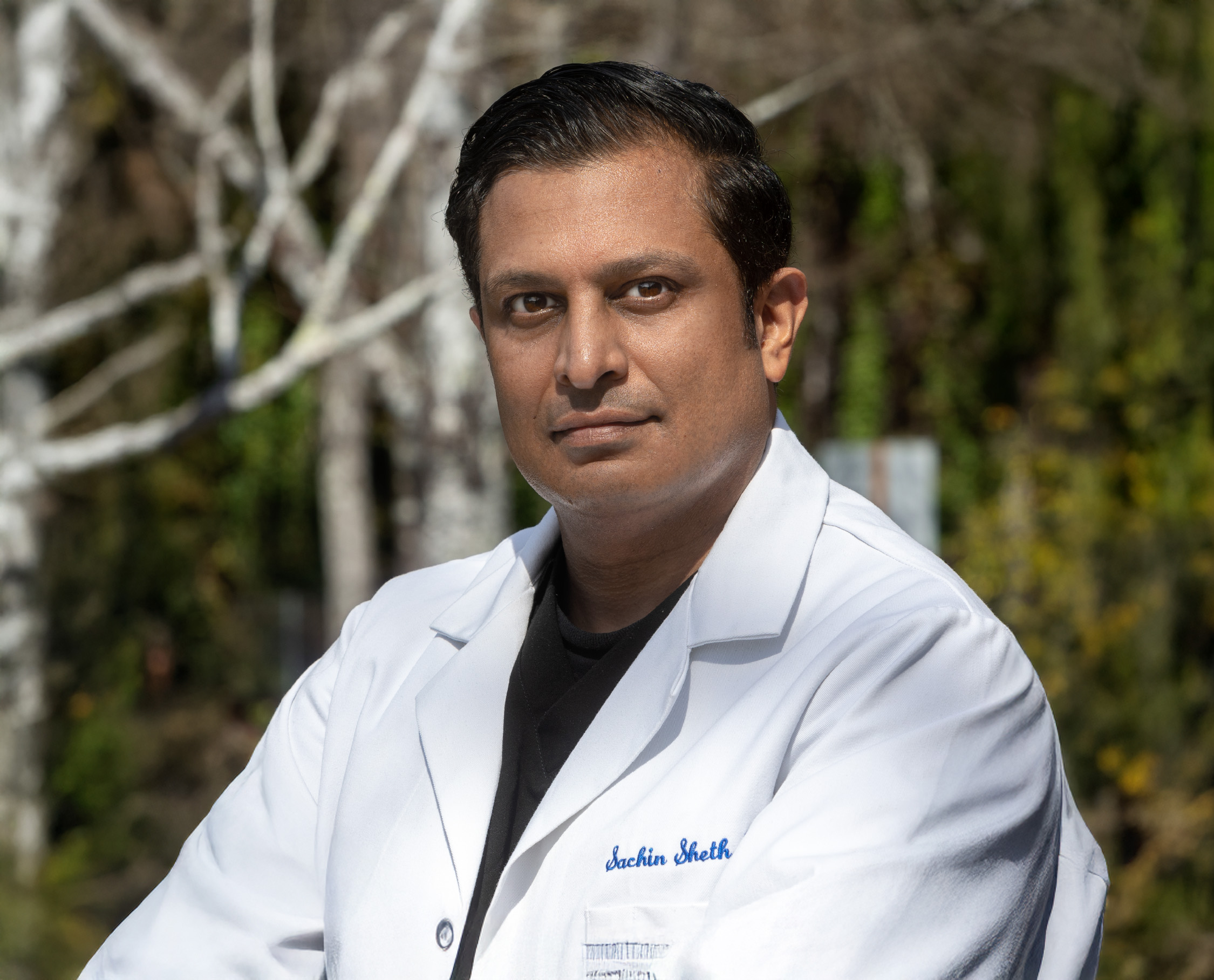
Dr. Sachin Sheth

Interventional Radiologist
Dr. Sachin Sheth is an interventional radiologist in Georgia with over 10 years of experience. As a vascular specialist and embolization expert, Dr. Sheth’s experience includes peripheral vascular disease, interventional oncology, vein disease, and uterine fibroids.
Real patients

What Atlanta patients say about their vein treatment

Rated 5 stars across Google, Healthgrades and social media
"I had the best experience! The office is very nice and welcoming. The staff were friendly and helpful. Nurse Jade was extremely helpful and patient with me and answered my questions. She made me feel at ease. Dr.Lei was very knowledgeable and kind."
Kimbria H.
I recently had the first of a three-visit schedule intended to address varicose veins. During visits for evaluation and consultation, I found the staff to be professional. My first session with Dr. Lie was encouraging. The doctor and his assistant were very cordial, professional and respectful. I look forward to a very positive outcome and will update this review accordingly.

A. Francis
Excellent staff.. Dr top notch ☀️☀️☀️☀️☀️The entire staff was excellent!!! Bedside manners of provider and anesthesiologist was beyond top notch ⭐️⭐️⭐️⭐️⭐️
Stephanie D.
Dr. Sachin Sheth did an amazing job thus far. I thought it was going to be painful….. Wasn’t sure what to expect. He explained everything to me and told me what he was doing step by step. I am so glad my Physician recommended me him. I’m seeing some result already. I would recommend my family and friends to go to him.
Leslie W.
find the best location for you

Vein treatment centers across metro Atlanta

Care is delivered close to home, in a comfortable outpatient setting — not a hospital campus. Find the office nearest you and request a time that works.

Atlanta

3225 Cumberland Blvd. Southeast
Suite 520
Atlanta, GA 30339

Schedule here

Tucker

1975 Lakeside Pkwy
Suite 300
Tucker, GA 30084

Schedule here

Stockbridge

1035 Southcrest Dr.
Suite 220 + 250
Stockbridge, GA 30281

Schedule here
common questions

Vein & vascular FAQs

Still deciding whether to come in? These are the questions we hear most. Can’t find yours? Call and ask us directly.
Am I a Candidate? Take the quiz678.210.6259

What is the difference between varicose veins and spider veins?

Varicose veins are large, raised, ropelike veins caused by failed valves in the larger veins beneath the skin, and they typically cause physical symptoms. Spider veins are much smaller red or blue lines sitting just under the skin surface and are usually painless. They can occur together, and spider veins are sometimes the first visible clue that a larger vein underneath is refluxing.

Are varicose veins dangerous, or just cosmetic?

While some people only dislike how varicose veins look, they are often a sign of underlying venous insufficiency. Left untreated, they can lead to worsening pain, swelling, skin discoloration, bleeding, blood clots, and slow-healing leg ulcers. An ultrasound evaluation tells us whether treatment is medically necessary.

Is varicose vein treatment covered by insurance?

Usually, yes. Medicare and most major insurers cover vein treatment when it is medically necessary — meaning you have documented symptoms, an ultrasound showing venous reflux, and a trial of conservative therapy such as compression stockings, typically for six to twelve weeks. Purely cosmetic spider vein treatment is generally not covered. Our team verifies your benefits and tells you what you’ll owe before anything is scheduled.

Does vein treatment hurt?

Most patients describe it as pressure rather than pain. The area is numbed with local anesthetic before the catheter or needle goes in, and the entry point is small enough that it typically doesn’t need a stitch. Mild soreness, tightness, or bruising along the treated vein for a few days afterward is normal and responds to over-the-counter pain relief.

Will my varicose veins come back after treatment?

Treated veins stay closed — once a vein is sealed and absorbed, it does not reopen. What treatment cannot change is your underlying genetics, so new veins can become symptomatic over time. This is far less likely when the original source of reflux was properly identified and treated, which is why we start with a complete ultrasound map rather than treating only what’s visible.

Is it safe to close off a vein? Don’t I need it?

Yes, it’s safe. Your deep veins carry roughly 90% of the blood returning from your legs, and the superficial vein being treated has already stopped contributing — blood in a refluxing vein is falling backward, not moving forward. Closing it removes an obstacle and lets healthy veins do their work more efficiently.

Do I need a referral to be seen for vein treatment?

Not for most plans. You can request an appointment with us directly. A few insurance plans require a referral from your primary care physician, and our team will tell you if yours is one of them when we verify your benefits.

What should I bring to my first appointment?

Your insurance card, photo ID, a list of current medications, and any prior vascular imaging or records if you’ve been evaluated elsewhere. Wear or bring shorts — we’ll need access to your full leg for the ultrasound. Plan for about an hour.

vein health insights FROM OUR DOCTORS

Learn about vein health from the specialists who treat it

Our physicians break down the questions patients ask most, in plain language, without the medical jargon.
sunheartstarpictureuserspushpinclock