Fibroids, hemorrhoids, a swollen leg and chronic plantar fasciitis may seem like unrelated problems, but they share a solution: opening or closing the vessels that feed them through a pinhole under live imaging. That is our focus, which is why one team can treat it all, rather than finding a new doctor to trust for each condition.
Consults, imaging and procedures all happen in our outpatient clinics, designed the way patients want to receive care. There is no admission, no operating room queue and, for most patients, no general anesthesia. You arrive in the morning, rest for a couple of hours afterward, and someone drives you home the same day.
You will meet your doctor at your initial consult, and that is the same doctor that reviews your imaging, performs your procedure and sees you at follow-up. Your care stays with the people who know your case; your imaging does not get handed to someone new, and you never have to tell your story twice.
We show you your own imaging, name what we are looking at, and describe the procedure in the words you would use to tell your family about it. A patient who can explain their own treatment is a patient who can decide about it.
Most of what we do is safer and more effective before a condition escalates. A leg ulcer that won't heal, a fibroid that has taken over a uterus, or knee OA past the point of repair can result from waiting, often because nobody offered an alternative.
Two patients with the same scan can need different things, depending on age, symptoms, history and their goals. We evaluate thoroughly, ask questions, and recommend accordingly, including when the answer is to wait or see another specialist.
Coverage is verified, benefits are explained, and you receive a written estimate before you are scheduled. We make sure you understand your coverage and costs upfront, so you can feel confident without surprises or unexpected bills later.
Interventional radiology moves quickly. Our physicians hold board certification in vascular and interventional radiology, maintain active memberships in the field's professional societies, and adopt techniques when the evidence supports them rather than when they are new.

Call us or request an appointment online and tell us what’s going on. We’ll match you with the right physician and the clinic closest to you. No referral is needed for most patients, and our team will verify coverage and explain your benefits before your first appointment.
We listen, examine, and use imaging when needed, all during the same visit. You leave with a clear understanding of what is causing the problem, what your treatment options are, and which options may be available to you, including treatments we do not perform.
Your doctor guides a thin catheter with live imaging to the vessel causing your symptoms and blocks the blood supply feeding the condition. No breathing tube or general anesthesia. After, you rest for a few hours, then go home the same day.
Our team and your physician will check in according to your personalized follow-up schedule. Because relief from embolization builds over weeks, not hours, follow-up helps us make sure you’re healing well and the procedure is working as intended.





3225 Cumberland Blvd. Southeast
Suite 520
Atlanta, GA 30339
Phone
(678) 208-9894
Hours
Monday - Friday
8:00am - 5:00pm

1975 Lakeside Pkwy
Suite 300
Tucker, GA 30084
Phone
(678) 210-5847
Hours
Monday - Friday
8:00am - 5:00pm

1035 Southcrest Dr.
Suite 220 + 250
Stockbridge, GA 30281
Phone
(678) 210-5817
Hours
Monday - Friday
8:00am - 5:00pm
Georgia Endovascular treats nine conditions, all with minimally invasive, image-guided procedures: uterine fibroids, vein disease, peripheral artery disease (PAD), enlarged prostate (BPH), internal hemorrhoids, knee osteoarthritis, frozen shoulder, tennis and golfer's elbow, and plantar fasciitis.
All nine share one thing: a blood supply that can be treated from inside the vessel rather than cut out.
An interventional radiologist is a physician who performs minimally invasive procedures using live imaging as a guide. Instead of opening the body to reach a problem, they thread a thin catheter through a pinhole in the wrist or groin and treat the target vessel directly. The Society of Interventional Radiology describes these procedures as treatment for conditions that once required open surgery.
Embolization uses a catheter to deliver tiny particles that block the blood supply feeding a problem, so the tissue causing your symptoms shrinks or settles down on its own. There is no large incision, so most patients need only local anesthetic and light sedation rather than general anesthesia, there is no hospital stay, and recovery is typically measured in days rather than weeks.
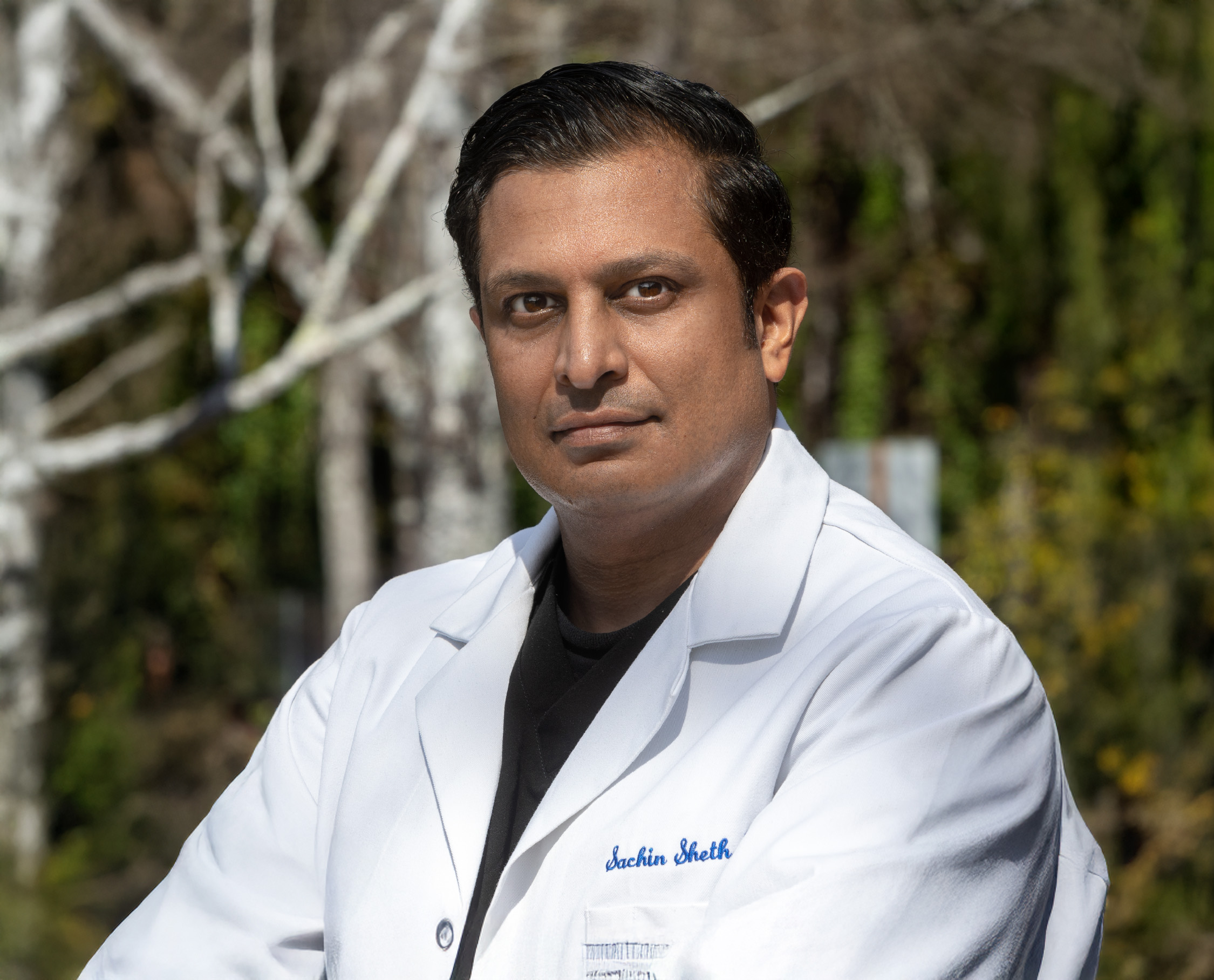
The practice is led by Dr. Kevin Lie, our head vascular and interventional radiologist, and Dr. Sachin Sheth, who is board-certified in both Diagnostic Radiology and Vascular & Interventional Radiology by the American Board of Radiology. They work alongside experienced physician assistants, registered vascular technologists, practice managers, and patient and physician liaisons to coordinate your care from your first visit through follow-up.
A referral is not required for most patients. We accept Medicare and most major commercial plans, including Aetna, Blue Cross Blue Shield, Cigna, Humana, Oscar, TRICARE and UnitedHealthcare. Our benefits team verifies your coverage and gives you a written estimate before your scheduled.
No. Consultations, imaging and procedures all take place in our own outpatient clinics in Atlanta, Tucker and Stockbridge. Most patients go home the same day with someone driving them home.
We have three clinics across metro Atlanta: Atlanta's Cumberland area, Tucker and Stockbridge. All three offer the same procedures and the same physicians.
To make image-guided, minimally invasive treatment something patients across Georgia actually hear about, understand and can reach, so that no one has to choose between living with debilitating symptoms and agreeing to major surgery.
Scheduling
Please contact our dedicated specialists to schedule a consultation today.