
678.208.9894 CALL TODAY
678.208.9894 CALL TODAY
This article was medically authored by Dr. Sachin Sheth and last reviewed for accuracy on 08/11/2026.
Visible veins can make you avoid showing off your legs. But blue, purple, twisted, or bulging veins are not always just a cosmetic concern. In some cases, they may indicate that blood is not moving efficiently through the veins in your legs.
When the valves inside your veins stop working properly, blood can collect in the legs and increase pressure within the veins. Over time, this may contribute to spider veins, varicose veins, swelling, discomfort, and other symptoms of vein disease.
Below, we explain why veins become visible, which warning signs deserve medical attention, and how minimally invasive treatment may help.
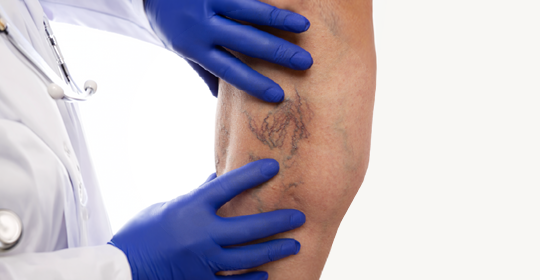
Your veins carry blood back toward your heart. Because the veins in your legs must move blood upward against gravity, they contain small, one-way valves that help prevent blood from flowing backward.
When these valves weaken or stop closing properly, blood may flow in the wrong direction and collect inside the veins. This condition is known as venous reflux or venous insufficiency. The resulting pressure can cause veins to enlarge, twist, bulge, or become more noticeable beneath the skin.
Veins may also become more visible because of aging, genetics, pregnancy, hormonal changes, prolonged sitting or standing, weight changes, or naturally thin skin.
The two most common types of visible leg veins are:
Some visible veins are primarily cosmetic. However, spider veins and varicose veins can also develop alongside an underlying vein condition. A professional evaluation can determine whether treatment should focus only on appearance or on a deeper circulation problem.
Vein disease does not always begin with severe pain. Symptoms may develop gradually and become more noticeable after long periods of sitting or standing.
Possible symptoms include:
These problems can interfere with exercise, work, sleep, travel, and everyday activities. Without appropriate care, some forms of vein disease may progress and contribute to skin damage, bleeding, inflammation, or venous ulcers.
It is worth scheduling an evaluation when visible veins are accompanied by persistent pain, swelling, heaviness, or changes in the surrounding skin.
You should also speak with a healthcare provider if you notice:
These changes may indicate that ongoing pressure inside unhealthy veins is affecting the surrounding skin and tissue.
Treating only the veins visible at the surface may not address the source of the problem. If a deeper vein continues to allow blood to flow backward, new spider veins or varicose veins may appear even after cosmetic treatment. Identifying the underlying cause can help your provider recommend a more complete treatment plan.
Visible veins alone are generally not an emergency. However, seek prompt medical attention for sudden one-sided leg swelling, significant pain, redness, warmth, or tenderness.
Call 911 for chest pain, sudden shortness of breath, rapid breathing, fainting, or coughing up blood. These symptoms may indicate a serious blood clot complication and require immediate evaluation.
During an evaluation at Georgia Endovascular, our team will discuss your symptoms, medical history, daily activities, and any changes you have noticed in your legs. We will also examine the affected areas.
When appropriate, we may perform a diagnostic ultrasound. This noninvasive test allows our specialists to evaluate blood flow, examine the veins below the skin, and identify valves that are not functioning properly.
The results help us determine:
Your treatment plan will be based on your ultrasound findings, symptoms, overall health, and individual goals.
Many people assume that varicose vein treatment requires hospitalization, large incisions, general anesthesia, or traditional vein-stripping surgery. Today, many vein conditions can be treated with minimally invasive, image-guided procedures performed in an outpatient setting.
Treatment options at Georgia Endovascular may include:
Radiofrequency ablation uses controlled thermal energy to close a vein affected by venous reflux. A thin catheter is placed inside the unhealthy vein using ultrasound guidance. Once the vein closes, blood naturally redirects through healthier vessels.
Cosmetic sclerotherapy is generally used for spider veins and small surface veins. A specialized solution is injected into the targeted vein, causing it to close and gradually fade.
Foam sclerotherapy may be used for varicose veins located beneath the skin. Ultrasound imaging helps the physician precisely deliver the treatment into the abnormal vein.
Ambulatory phlebectomy removes raised or bulging surface veins through very small openings in the skin. The procedure is typically performed using local anesthesia in an outpatient setting.
The appropriate treatment will depend on the location and severity of the unhealthy veins. Some patients may benefit from a combination of procedures.
After an unhealthy vein is closed or removed, blood reroutes through functioning veins. Many patients can walk shortly after treatment and return to light activities with limited downtime. Your provider will explain what to expect before, during, and after your recommended procedure.
Visible veins may begin as a cosmetic frustration. But when they are accompanied by aching, swelling, heaviness, cramping, itching, or skin changes, they may be signaling an underlying circulation problem.
You do not have to wait for symptoms to become severe before seeking answers.
Georgia Endovascular provides minimally invasive vein evaluations and treatments at convenient locations in Atlanta, Tucker, and Stockbridge. Our specialists can identify what is causing your visible veins and recommend an appropriate path toward healthier, more comfortable legs.
[Ga-appt-link] Request an Appointment [/ga-appt-link] to learn more about your vein treatment options at Georgia Endovascular.
Scheduling
Please contact our dedicated specialists to schedule a consultation today.