This article was medically authored by Dr. Sachin Sheth and last reviewed for accuracy on 11/10/2026
If you're experiencing swollen, painful, or visibly enlarged veins, you may be hoping to restore their original condition. But can damaged veins heal? Are there treatments that improve circulation without surgery? And if a vein can no longer function properly, what can be done to relieve your symptoms?
The good news is that today’s vascular treatments offer several ways to improve circulation, reduce discomfort, and address the underlying causes of vein disease. While damaged vein valves generally cannot be restored to their original function, minimally invasive procedures can help your body redirect blood through healthier veins.
At Georgia Endovascular, our interventional radiologists offer several nonsurgical and minimally invasive treatments for varicose veins and chronic venous insufficiency. Understanding how these procedures compare can help you make an informed decision about your vascular health.
Key Takeaways
Veins carry blood from different parts of your body back to your heart. In your legs, tiny one-way valves help prevent blood from flowing backward as it moves against gravity.
When these valves weaken or become damaged, blood can flow in the wrong direction and accumulate in the lower extremities. This condition, known as chronic venous insufficiency (CVI), increases pressure inside the veins and can produce symptoms such as:
Although the term vein restoration suggests repairing a damaged blood vessel, treatment often works differently. Rather than attempting to restore a vein whose valves are permanently damaged, we may close or remove the malfunctioning vessel. This allows blood to travel through healthier veins that can return it to the heart more efficiently.
However, not every venous problem is treated by closing a vein. Conditions involving blocked veins, for example, may require treatments designed to reopen the affected vessel. That's why identifying the underlying circulation problem is essential before choosing a treatment.
Unfortunately, once the valves inside a vein have become significantly damaged, they generally cannot regenerate or regain normal function—but you can still improve your symptoms.
For individuals with mild venous insufficiency, several conservative approaches may help reduce discomfort and support circulation.
Medical-grade compression stockings apply graduated pressure to the legs, helping blood move upward toward the heart rather than collecting in the lower extremities.
They may help reduce swelling, aching, and heaviness, especially for people who spend much of their day sitting or standing.
Walking, cycling, swimming, and other forms of exercise activate the calf muscles, helping push blood through the leg veins.
Elevating your legs above heart level for short periods may temporarily reduce venous pressure and swelling.
This can be particularly helpful after extended periods of standing.
Maintaining a healthy weight can reduce pressure on the veins in your legs. Avoiding prolonged periods of immobility may also help minimize symptoms.
These conservative measures can be valuable, but they may not provide sufficient relief when venous insufficiency is more advanced.
For patients whose symptoms persist, minimally invasive procedures may offer a more effective solution.
One alternative to traditional vein surgery is radiofrequency ablation (RFA), a minimally invasive treatment for certain malfunctioning veins.
During this procedure, an interventional radiologist inserts a thin catheter into the affected vein using ultrasound guidance.
The catheter delivers controlled radiofrequency energy that heats the vein wall, causing it to collapse and seal shut.
Once the abnormal vein is closed, blood naturally redirects through healthier veins.
RFA offers several advantages compared with traditional surgical vein stripping:
RFA is commonly used for larger superficial veins. Although the procedure does not restore the damaged vein itself, it addresses abnormal blood flow that contributes to symptoms.
When spider veins or smaller varicose veins are the primary concern, sclerotherapy may be an appropriate alternative.
Rather than using heat, this treatment involves injecting a specialized solution directly into the affected vein; it irritates the vein's inner lining, causing the vessel to close. Over time, the treated vein becomes less visible as the body gradually breaks it down.
At Georgia Endovascular, we offer both cosmetic and ultrasound-guided foam sclerotherapy.
Cosmetic Sclerotherapy
This approach is commonly used for spider veins and smaller surface veins that appear as thin red, blue, or purple lines beneath the skin.
Treatment can improve their appearance and may relieve localized symptoms.
Ultrasound-Guided Foam Sclerotherapy
For certain deeper or larger varicose veins, a foam solution can be injected under ultrasound guidance.
Because the physician can visualize the targeted vein, this approach allows us to treat vessels that aren’t easily visible at the skin's surface.
Foam sclerotherapy may also be used alongside radiofrequency ablation to address remaining abnormal veins.
Both treatments close unhealthy veins, but they use different techniques.
Radiofrequency ablation is generally suited to larger, relatively straight superficial veins that can accommodate a catheter.
Sclerotherapy may be preferable for smaller, winding, or residual varicose veins.
Neither procedure is universally superior. In some cases, combining both treatments produces a more comprehensive result.
Some varicose veins become enlarged enough to protrude above the surface of the skin.
When these bulging veins cause discomfort or cosmetic concerns, ambulatory phlebectomy may offer another treatment option.
During this minimally invasive procedure, a physician removes the affected surface veins through tiny openings in the skin.
Unlike radiofrequency ablation and sclerotherapy, phlebectomy physically removes selected varicose veins.
Why Consider Ambulatory Phlebectomy?
This procedure may be useful when:
Ambulatory phlebectomy is typically performed using local anesthesia, and many patients return to ordinary activities relatively quickly.
Temporary bruising, tenderness, and small skin marks can occur.
Before minimally invasive techniques became widely available, surgical vein stripping was a common treatment for significant varicose veins.
During the procedure, a surgeon removes an affected vein through surgical incisions, resulting in more tissue disruption and a longer recovery period than modern catheter-based treatments.
Surgical intervention may still be appropriate in selected situations, but many people with superficial venous reflux can now receive effective treatment without vein stripping.
Yes, but these procedures address different vascular problems.
For example, some patients experience impaired circulation because a major vein is narrowed or blocked rather than because its valves are allowing blood to flow backward.
In selected patients, physicians may use balloon angioplasty or venous stenting to reopen a narrowed vein and improve blood flow.
These approaches are fundamentally different from procedures such as radiofrequency ablation, which close veins affected by reflux.
A vascular specialist must first determine whether your symptoms are caused by abnormal backward blood flow, an obstruction, or another medical condition.
How to Choose Your Best Vein Treatment
Choosing the right treatment involves more than evaluating the appearance of your veins look.
Two people with similar-looking varicose veins may have very different underlying circulation problems.
That's why a comprehensive assessment is so important.
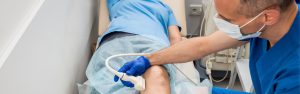
At Georgia Endovascular, our team begin consultations with an ultrasound examination to evaluate blood flow, identify malfunctioning valves, and determine which veins are contributing to your symptoms.
The results help establish whether conservative management, radiofrequency ablation, sclerotherapy, ambulatory phlebectomy, or a combination of approaches may be most appropriate.
One of the most common questions patients ask is whether varicose veins return after treatment.
Successfully treated veins often remain closed or are permanently removed, depending on the procedure.
However, vein disease can progress over time. Other veins may eventually develop valve dysfunction, particularly in individuals with a family history of venous insufficiency or other risk factors.
Maintaining an active lifestyle, following post-treatment instructions, and seeking evaluation if symptoms return can support your long-term vascular health.
If you're searching for alternatives to vein restoration, the most important thing to understand is that improving your circulation doesn't necessarily require repairing the damaged vein itself.
Modern minimally invasive treatments can close or remove malfunctioning superficial veins, allowing blood to return through healthier vessels.
At Georgia Endovascular, our experienced interventional radiologists offer personalized care for varicose veins, chronic venous insufficiency, and other vascular conditions.
With three convenient locations in Atlanta, Tucker, and Stockbridge, our team can help determine which treatment approach best matches your symptoms and vascular health needs.
You don't have to live with persistent leg discomfort, swelling, or painful varicose veins. Contact our team today to request your consultation .
Scheduling
Please contact our dedicated specialists to schedule a consultation today.