This article was medically authored by Dr. Sachin Sheth and last reviewed for accuracy on 06/24/2026.
If you’re experiencing back and leg pain and suspect it might be linked to an enlarged prostate, you’re not alone. An enlarged prostate can lead to discomfort in these areas, often due to conditions like benign prostatic hyperplasia (BPH), prostatitis (prostate inflammation), or even prostate cancer.
Keep reading to discover how an enlarged prostate can contribute to back and leg pain and learn about effective treatment options to help relieve your discomfort and improve your quality of life.
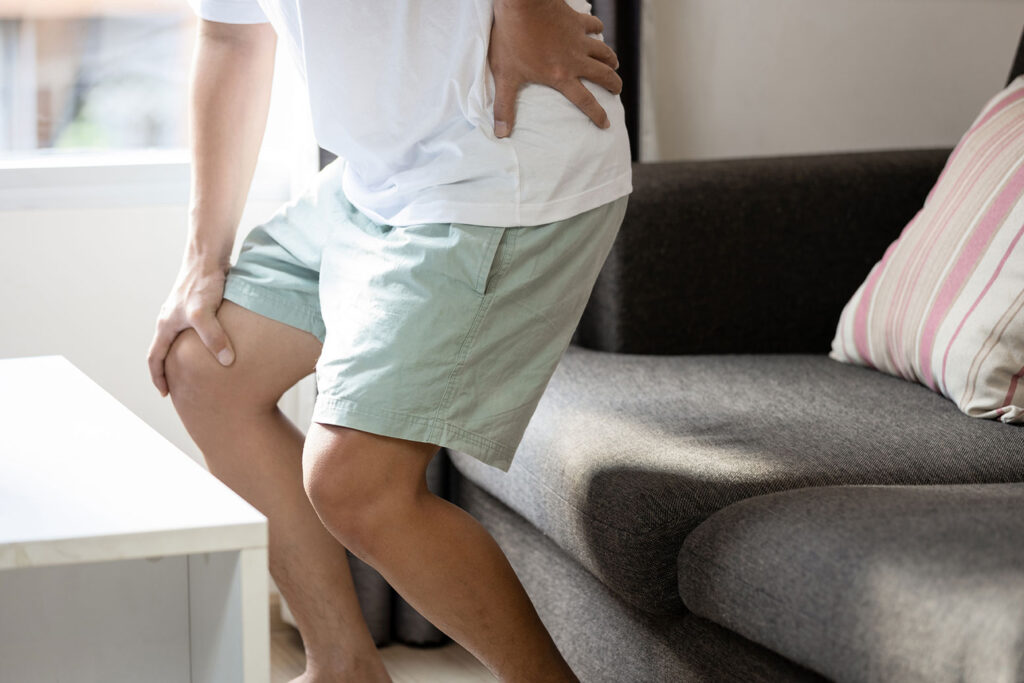
The most common symptoms of an enlarged prostate are described as LUTS, or lower urinary tract symptoms. These include:
If you have an enlarged prostate along with symptoms like hip, lower back, or abdomen pain, unexplained weight loss, swelling or numbness in the legs, new erectile dysfunction, or blood in the urine, talk your doctor immediately. These signs could indicate a more serious condition, like prostate cancer.
When managing prostate back pain, a combination of lifestyle changes and medical treatments can help.
Strengthening exercises for the lower back may provide relief, but it’s important to avoid activities like cycling that could put extra strain on the area.
You may also find relief from back pain and other mild BPH symptoms by adjusting your diet and hydration, such as increasing fiber intake and drinking more water during the day, while limiting fluids before bed time.
However, if your symptoms become moderate to severe, a medical procedure may be needed to relieve the effects of BPH. Since conditions like prostatitis (prostate inflammation) and prostate cancer can also cause prostate enlargement and similar symptoms, further evaluation may be necessary to determine the right treatment approach.
Having an enlarged prostate can cause leg pain. Although, an enlarged prostate by itself isn't typically a direct cause of leg pain. Leg discomfort can show up alongside prostate issues in indirect ways such as chronic straining or disrupted sleep from urinary symptoms can lead to leg and muscle pain.
Prostatitis, an acutely inflamed or infected prostate can cause direct muscle and joint pain that radiates to the groin, pelvic area, and inner or upper thighs.
If you’re struggling with painful leg and back symptoms due to an enlarged prostate, treatment options are available that can provide much-needed relief.
Identifying the cause of prostate enlargement is crucial for guiding your next steps. But if BPH is the issues, you may be able to avoid surgery and enhance your quality of life by considering Prostate Artery Embolization (PAE) treatment. This minimally invasive procedure reduces the size of the prostate by blocking blood flow to the gland, all without major incisions or general anesthesia. Available at the Georgia Endovascular, you can request a consultation to learn more about PAE and assess your candidacy for this effective BPH treatment option.
Scheduling
Please contact our dedicated specialists to schedule a consultation today.