




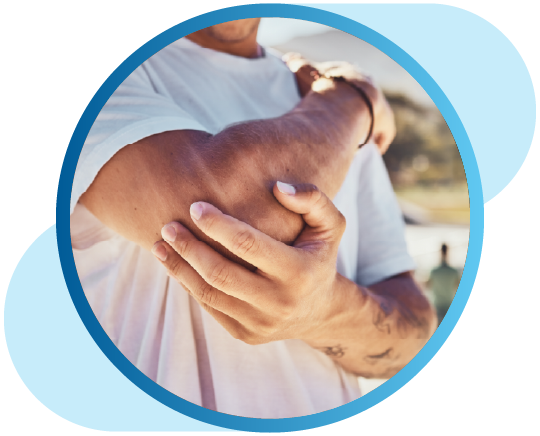
Understanding joint pain
Joint pain can develop gradually or suddenly, depending on the underlying cause. While occasional discomfort is common, persistent or recurring pain often signals deeper inflammation or soft tissue damage.
Causes of chronic joint discomfort
Joint pain may result from repetitive strain, age-related degeneration, overuse injuries, inflammation, or underlying medical conditions.
According to the National Institute of Arthritis and Musculoskeletal and Skin Diseases (NIAMS), chronic joint pain often occurs when cartilage, tendons, or surrounding tissues become irritated, weakened, or inflamed.
Common contributors include:
- Wear-and-tear on cartilage
- Overuse from repetitive motion
- Tendon irritation or degeneration
- Ligament strain
- Muscle imbalances
- Previous injuries or trauma
- Structural joint changes
How inflammation affects mobility
Inflammation plays a major role in chronic joint pain. When tissues become inflamed, the joint may feel stiff, swollen, or painful during movement.
Over time, chronic inflammation can lead to:
- Stiffness and reduced range of motion
- Difficulty walking, lifting, gripping, or standing
- Increased pain during activity
- Reduced ability to participate in work, exercise, or hobbies
At Georgia Endovascular, our board-certified interventional radiologists use imaging and minimally invasive techniques to directly target this inflammation and provide relief.

Common joint conditions we treat
Our team of specialists diagnoses and manages a wide range of joint conditions that cause chronic pain, stiffness, and limited mobility.
Knee osteoarthritis occurs when the cartilage that cushions the knee joint gradually breaks down. Over time, this leads to pain, stiffness, swelling, and difficulty bending or straightening the knee. Symptoms may worsen after activity or prolonged standing.
Frozen shoulder (adhesive capsulitis) develops when the tissues surrounding the shoulder joint become thickened and inflamed, causing stiffness and a progressive loss of mobility. People often experience a dull, aching pain that worsens with movement or at night.
Golfer’s elbow (medial epicondylitis)
Golfer’s elbow causes pain along the inner side of the elbow where the forearm tendons attach to the bone. It typically results from repetitive gripping, lifting, or wrist-flexing movements. Pain may radiate down the forearm and worsen with wrist bending.
Tennis elbow (lateral epicondylitis)
Tennis elbow affects the outer part of the elbow due to irritation or degeneration of the tendons involved in wrist extension. Symptoms include pain, burning, and reduced grip strength, especially during lifting, twisting, or grasping activities.
Plantar fasciitis causes sharp or stabbing heel pain, especially with the first steps in the morning or after long periods of standing. It occurs when the plantar fascia, the thick band of tissue supporting the arch of the foot, becomes irritated or overstressed.
Minimally invasive joint treatments
When conservative therapies, such as rest, physical therapy, injections, bracing, or medication, are not enough, Georgia Endovascular offers advanced, image-guided procedures that target inflammation and abnormal blood flow at the source.
These minimally invasive treatments help reduce pain, improve function, and provide long-lasting relief without surgery.
Genicular artery embolization (GAE)
GAE is a minimally invasive procedure for chronic knee pain, including knee osteoarthritis. By reducing abnormal blood flow to irritated knee structures, GAE helps decrease inflammation and improve mobility in patients who haven’t found relief through traditional therapies.
Transarterial elbow embolization (TAE)
TAE treats chronic elbow pain caused by conditions such as golfer’s elbow and tennis elbow. The procedure blocks abnormal microvessels that contribute to tendon irritation, relieving pain and restoring function without disrupting healthy tissue.
According to clinical reports published in the National Library of Medicine, TAE procedures have shown promising results for patients with chronic tendon and joint inflammation who have not improved with conservative care.
Adhesive capsulitis embolization (ACE)
ACE is a targeted treatment for frozen shoulder (adhesive capsulitis). By reducing excess blood flow associated with inflammation and restricted shoulder movement, ACE helps improve range of motion and reduce pain—especially in patients who haven’t responded to physical therapy.
Plantar fasciitis embolization (PFE)
PFE is a minimally invasive option for the treatment of chronic plantar fasciitis. The procedure reduces excess blood flow around the inflamed plantar fascia, easing heel pain and supporting long-term healing without surgery.
Benefits of embolization for pain relief
Embolization offers several advantages for patients seeking nonsurgical joint pain solutions:
- Minimally invasive with no large incisions
- Performed under local anesthesia
- Outpatient procedure with quick recovery
- Targets inflammation at the source
- Helps reduce chronic pain and improve mobility
- Preserves joint structure and function
- Reduces the need for traditional surgery
Why choose Georgia Endovascular for joint care
Georgia Endovascular is a leader in minimally invasive, image-guided joint treatments.
Our board-certified interventional radiologists use advanced techniques to diagnose the root cause of joint pain and deliver precise, effective care.
Here’s what sets our team apart:
- A patient-first approach focused on long-term results
- Expertise in embolization for chronic joint pain
- State-of-the-art imaging and procedural technology
- Personalized treatment plans tailored to each patient
- Faster recovery and reduced downtime compared to surgery
- Convenient locations across Georgia
Expert joint care in Georgia
If chronic joint pain is limiting your movement, sleep, or daily routine, relief is closer than you think.
Our team at Georgia Endovascular offers innovative, nonsurgical solutions designed to reduce inflammation, restore mobility, and help you return to the activities you love.
To begin your treatment journey, find a Georgia Endovascular location near you.
FAQs about joint conditions
Here are answers to common questions patients ask about joint pain and treatment options.
What causes chronic joint pain?
Chronic joint pain often results from tendon irritation, cartilage wear, repetitive strain, inflammation, or underlying degenerative conditions such as osteoarthritis.
How does embolization relieve joint pain?
Embolization blocks abnormal microvessels that contribute to inflammation. This reduces pain signals and allows the surrounding tissues to heal more effectively.
Is embolization an alternative to joint surgery?
For many patients, yes. Embolization is a nonsurgical option that can help delay or avoid joint surgery, especially for individuals who do not respond to conservative treatments.
What conditions respond best to this treatment?
Embolization may benefit patients with knee osteoarthritis, plantar fasciitis, frozen shoulder, golfer’s elbow, and tennis elbow — particularly when symptoms persist despite physical therapy or medication.
How soon can I return to daily activities after treatment?
Most patients resume light activity within a few days. Full improvements continue over the following weeks as inflammation gradually decreases.